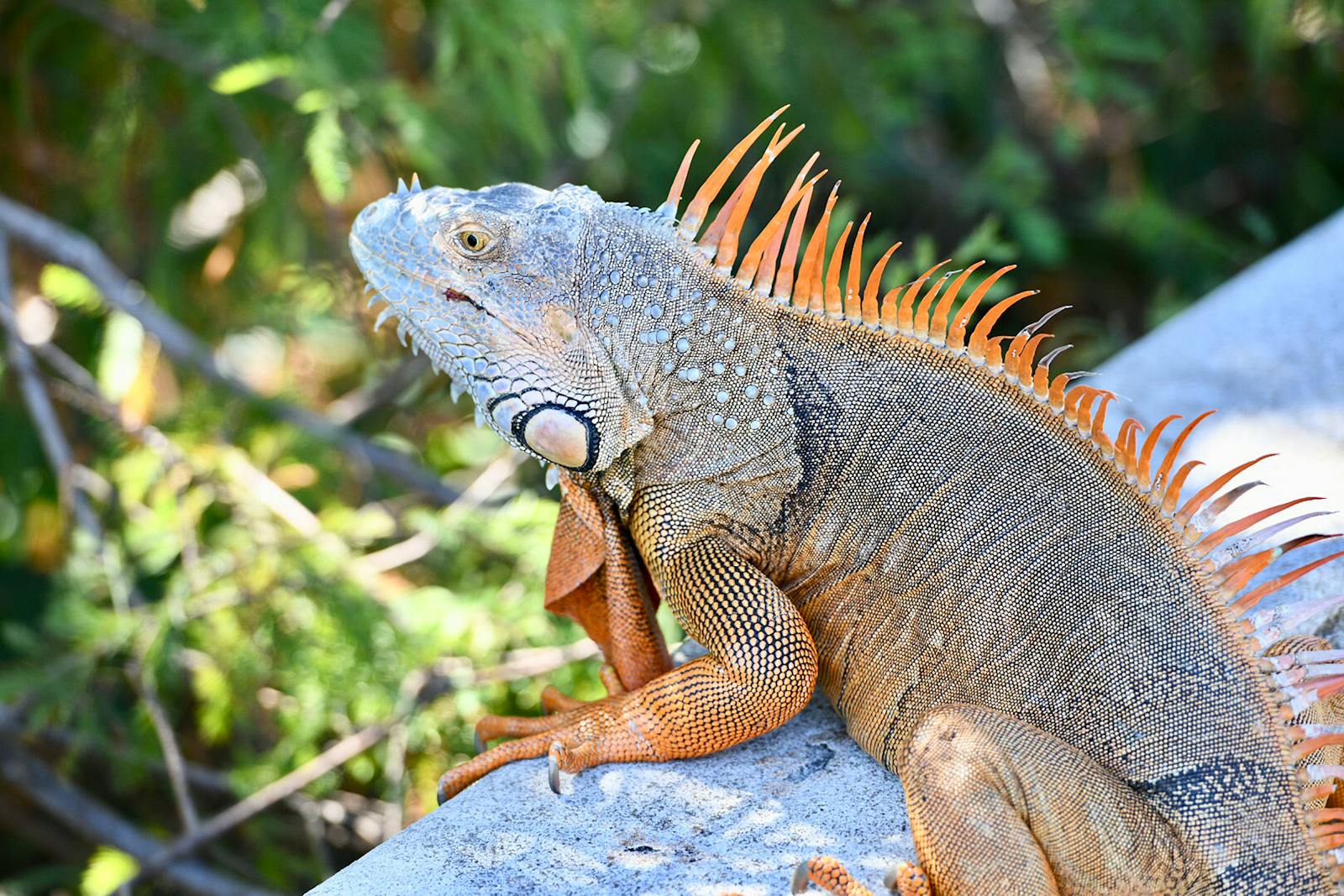
Green iguanas are the most commonly surrendered reptile in the United States because people consistently underestimate the adult size. A green iguana is not a desktop lizard, it's a vegetarian lap-dog that will eventually need its own room.
Enclosure & Setup
Adults realistically need a small bedroom's worth of space, 8×4×6 ft minimum. Heavy climbing branches that can hold their weight. They're arboreal, vertical space matters more than floor space.
Heat, Lighting & Humidity
Basking: 95–100°F. Ambient: 80–88°F. High-output T5 UVB across the entire enclosure. Iguanas are strict diurnal baskers, UVB is critical, not optional.
Diet & Feeding
Strict herbivore. Dark leafy greens (collards, mustard, turnip, dandelion), some squash, occasional fruit. NEVER feed animal protein, it destroys their kidneys. Calcium dust 3–4 times a week.
Handling & Temperament
Captive-bred and well-socialized iguanas can be remarkably tame. Whip tails when frightened, can leave welts. Trim claws regularly. Males during breeding season can become aggressive.
That cute foot-long baby iguana will be five feet long and require a custom-built enclosure within two years. Plan for it on day one, not day 700.
Common Issues To Watch For
MBD, kidney failure from improper diet (especially animal protein), prolapses. Most iguana problems come from "too small, too cool, too few greens, too much protein."