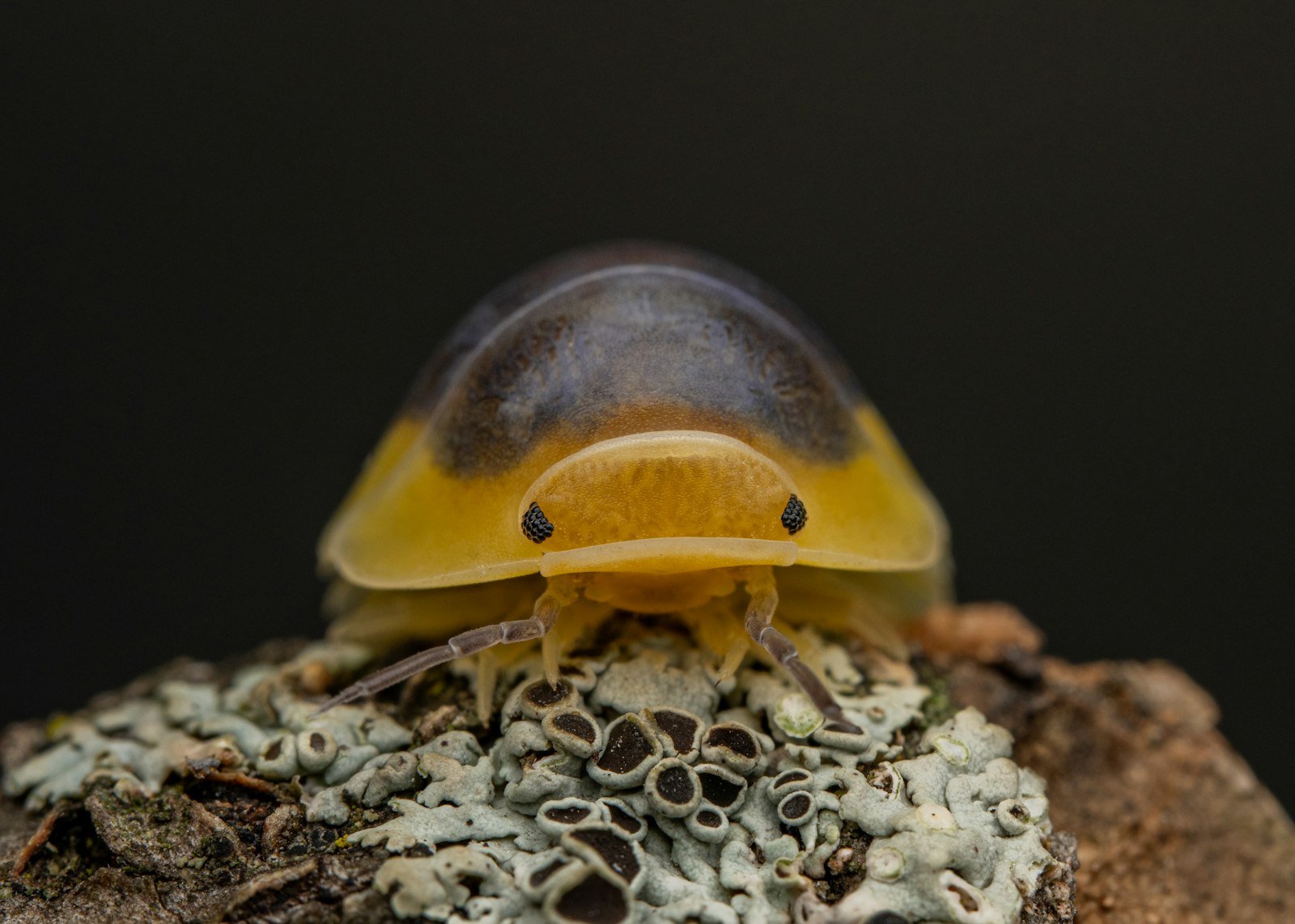
Isopods sit at the intersection of useful and adorable. They're the backbone of bioactive terrariums, eating waste, aerating substrate, but morphs like Powder Blues, Rubber Duckies, and Dairy Cows have become collectible pets in their own right.
Enclosure & Setup
A clear plastic tub with cross-ventilation works perfectly. Substrate: coco coir or organic topsoil mixed with leaf litter. Add bits of rotten wood and a small flat rock or piece of cork bark for hiding.
Heat, Lighting & Humidity
Room temperature is fine for most species. Some tropical species (Cubaris) want 75–80°F and 80%+ humidity. No special lighting needed.
Diet & Feeding
Decaying leaf litter is their main food. Supplement with vegetable scraps (cucumber, carrot, squash), fish flakes for protein, and a calcium source (cuttlebone or eggshell powder). They eat slowly, small amounts.
Handling & Temperament
They're curious and tolerate gentle handling. Just be gentle, they can be crushed easily.
Aim for one side of the enclosure moist, the other dry. An isopod that can choose its humidity is an isopod that lives.
Common Issues To Watch For
Crashes happen if the enclosure gets too dry or too wet. Avoid pesticide-treated plants or substrate. Don't mix species (they'll cross-breed or out-compete each other).