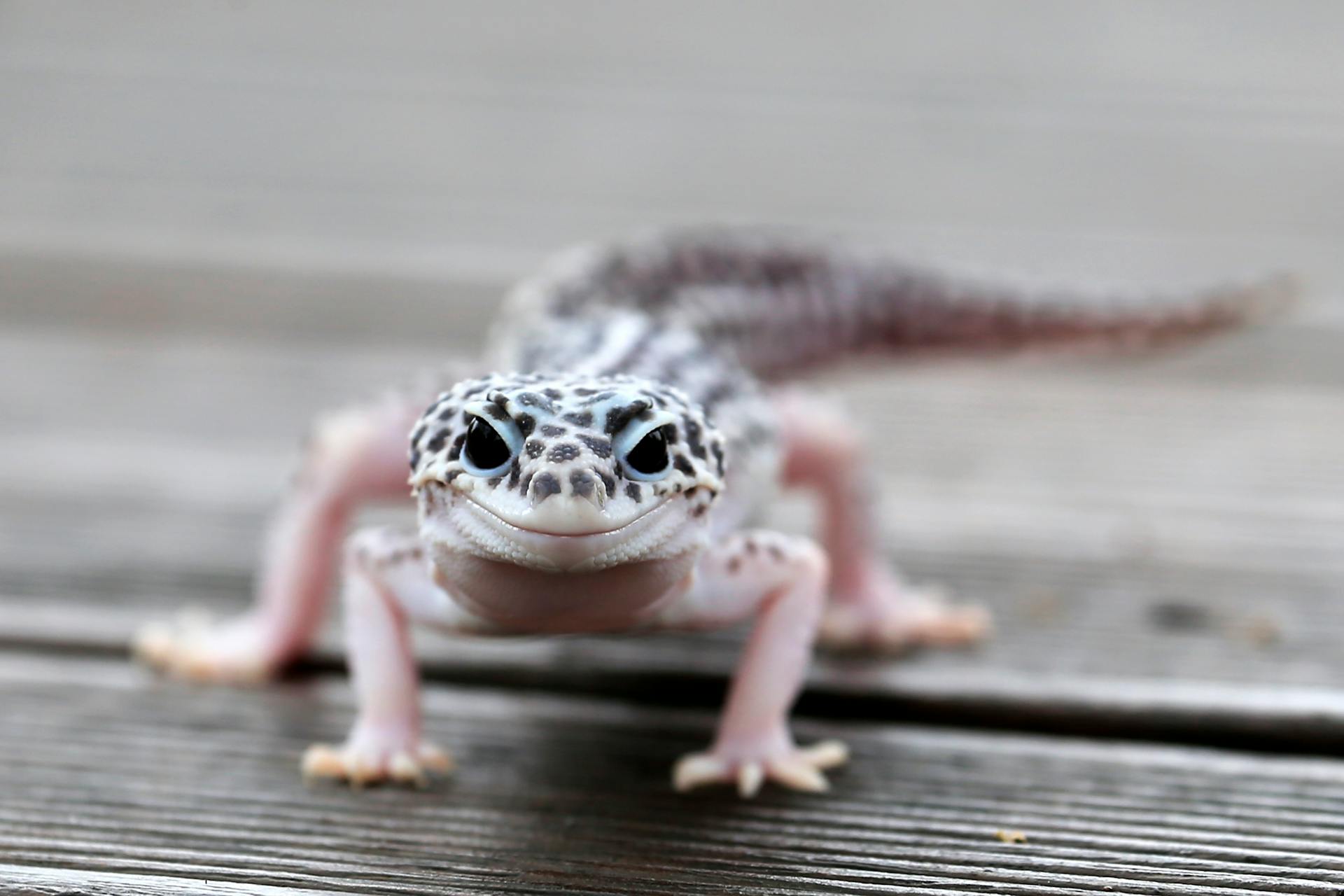
Leopard geckos are the closest thing in the reptile world to a low-maintenance starter pet. No special UVB requirements until recently, easy diet, calm temperament, and a lifespan that rewards good husbandry. They're the lizard most owners keep for decades.
Enclosure & Setup
A 20-gallon long (30×12×12″) is the minimum for one adult, bigger is better. Three hides minimum: warm, cool, and humid (for shedding). Solid substrate (tile, paper towel, or bioactive), never loose sand, which causes impaction.
Heat, Lighting & Humidity
Warm side basking: 88–92°F. Cool side: 70–75°F. UVB is increasingly recommended (low-output, like Arcadia 6%) even though they're primarily crepuscular. Heat from above with a halogen or DHP, not from below.
Diet & Feeding
Crickets, mealworms, discoid roaches, hornworms, occasional waxworms (treats only, fatty). Always dust with calcium + D3 a few times a week and a multivitamin once a week. Feed every 1–2 days for juveniles, every 2–4 days for adults.
Handling & Temperament
Hands-down one of the most tolerant lizards. Let them settle a week after coming home, then short handling sessions, always supporting the body. Never grab by the tail, it will detach (and grow back, but uglier).
A leopard gecko on a heat mat with no overhead heat is a leopard gecko slowly burning its belly. Heat from above, always.
Common Issues To Watch For
Metabolic bone disease (MBD) from lack of calcium/UVB, fatal but completely preventable. Impaction from loose substrate. Tail drops from stress or rough handling. Buy captive-bred to avoid Cryptosporidium.