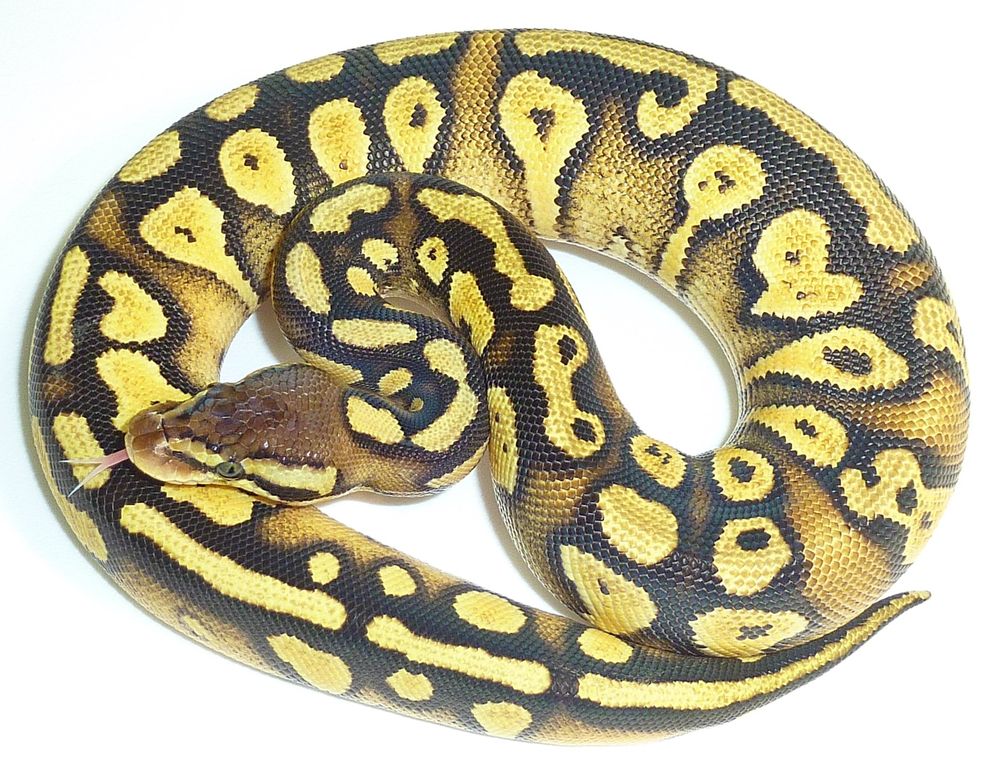
Ball pythons earned the top spot in the pet snake world by being exactly what most new keepers want: small, calm, and forgiving. A well-cared-for ball python will live longer than most cats or dogs and ask remarkably little of you in return.
Enclosure & Setup
A single adult does well in a 40-gallon (36×18×18″) enclosure or larger. Front-opening PVC cages hold humidity best. Provide two hides, one on the warm side, one on the cool side, plus a sturdy water bowl big enough to soak in.
Heat, Lighting & Humidity
Warm side: 88–92°F basking spot. Cool side: 75–80°F. Nighttime drops to ~75°F are fine. Humidity: 55–65% normally, raise to 70%+ during shed. Use a thermostat, never run a heat lamp or heat mat without one.
Diet & Feeding
Appropriately-sized frozen-thawed rodents (mouse → rat as they grow) every 7–14 days. Prey should be about the same width as the snake's widest point. Don't feed live unless absolutely necessary, frozen-thawed is safer for both snake and prey.
Handling & Temperament
Wait at least a week after bringing one home before handling. Then start with short 5–10 minute sessions. Never handle within 48 hours of feeding. Ball pythons can be picky eaters and may refuse food for weeks, usually nothing to worry about as long as they hold body weight.
A ball python that refuses food for weeks is almost always fine. A ball python that loses weight is not. Watch the scale, not the calendar.
Common Issues To Watch For
Most ball python health issues trace back to humidity being too low or temps being off. Watch for mites (tiny black specks), respiratory infections (open-mouth breathing or bubbles), and stuck shed. Fix the enclosure first; vet visit if symptoms persist beyond 48 hours.